
Designing the Next Dimension

Master Computational Design Course

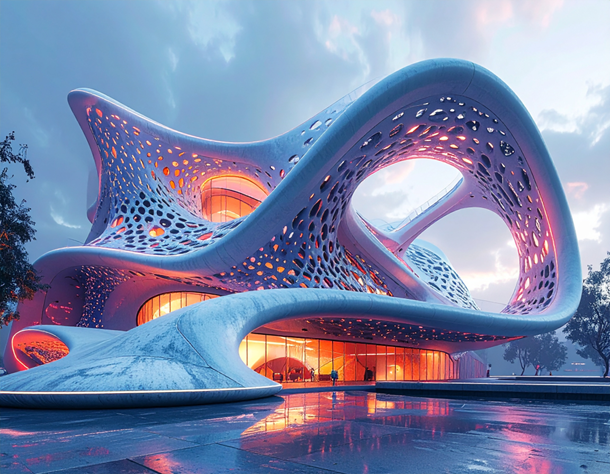
Break into an advanced career by learning to design efficient built environments with computational tools. A creative specialisation for architects and engineers.


  • Program Duration

    6 months
  • Next Cohort

    To Be Announced
The Deadline to Submit your application is 31st October

learning computational thinking, mastering design software, and exploring emerging technologies like VR/AR, alongside hands-on experience in digital fabrication.

know more
Learn from Mentors Working at
Course Highlights

0

Mentor - Student Ratio

0 +

Global Learning Experts

0 +

Live & Guided Sessions

0 +

Industry Relevent Softwares

Course Highlights

Master 5+ software and 15+ plugins used in the industry in just 6 months.


0+

Enrolled Learners

0%

Average CTC Hike

0

Learner Review on Google

AEC industry is transforming be a part of its future with BIM.

Take the leap and elevate your professional journey.

Program Overview

Become a Master Computational Design Specialist and accelerate your career in the AEC industry.


Computational design uses algorithms and computer-based tools to support and enhance the design process. It enables designers to explore a wider range of design possibilities, optimize designs, and automate repetitive tasks. By translating design processes into algorithmic instructions, it allows for the generation of complex geometries, simulations, and data-driven insights to improve efficiency and innovation in design. 


Unlock Design Potential: Master Computational Design and Transform Your Approach.

Unlock Design Potential: Master Computational Design and Transform Your Approach.

A Master’s in Computational Design equips you to integrate computational thinking, digital tools, and fabrication processes into various design fields. It focuses on using computational methods for design, analysis, and optimization, often within architecture, product design, and urban planning. Learning computational design involves mastering specific software, algorithmic design, parametric modeling, and potentially programming languages like Python.

Attend weekly live sessions with expert mentors.


For the full course structure and learning outcomes, download the syllabus.


COURSE

Master Computational Design: Where Code Meets Creativity, Shaping the Future of Innovation.

INDEX ((8))

Introduction to Computational Design

  • What is computational design?
  • Differences between parametric and conventional modeling
  • Evolution in AEC industry
  • Overview of tools: Rhino, Grasshopper, Dynamo, Python
  • Case studies of computational design in architecture

Rhino for Designers – Precision Modeling

  • Rhino interface and navigation
  • Working with curves, surfaces, solids
  • Precision modeling techniques
  • Layers, object properties, and transformations

Grasshopper Essentials – Visual Programming

  • Interface & logic of Grasshopper
  • Data types, parameters, and components
  • Basic geometry generation: points, curves, surfaces
  • Understanding data trees and lists
  • Output: Parametric wall/facade system

Design Algorithms & Pattern Generation

  • Mathematical logic in design
  • Attractors and transformations
  • Grids, tiling, and surface division
  • Geometrical patterns and responsive design
  • Output: Responsive screen or shading system

Advanced Parametric Modeling

  • Adaptive geometries and relationships
  • Components: Rotate, Scale, Move with rules
  • Use of Graph Mappers and conditional expressions
  • Optimization basics with Galapagos
  • Output: Responsive pavilion structure

Dynamo for Revit

  • Introduction to Dynamo and Revit integration
  • Automating tasks in Revit with Dynamo
  • Working with BIM data parametrically
  • Visual logic, nodes, and Python scripting basics
  • Output: Rule-based Revit massing model

Generative Design & Environmental Inputs

  • Generative design principles
  • Working with inputs like sun path, wind, or user data
  • Analysis using Ladybug/Honeybee plugins
  • Optimization with sliders, rules, and logic
  • Output: Passive design prototype

Final Project & Presentation

  • Full computational design workflow
  • Concept → Logic → Geometry → Analysis → Output
  • Documentation: diagrams, scripts, renders
  • Portfolio tips for computational design careers
  • Final Review & Certification
Expert Mentors

Learn from experts who designed large-scale projects using the Computational Design process.

ADITI SHARMA
Computational Designer
PRIYA NAIR
AEC Computational Specialist

Learn Better with Shrelink's Cutting-edge Platform

Design Beyond Limits: Mastering Computational Design for the Future of BIM. This emphasizes the program’s focus on pushing the boundaries of design through computational methods and its relevance to the future of Building Information Modelling (BIM).


All-in-One Platform

From attending your lessons to completing your tasks, you never need to use any other platform while upgrading your skills.

Query Resolution and Live Support

Never let your questions go unanswered. Get your doubts solved in less than 7 hours.

Personalised Reports

Track all Course information in a single platform. From Performance Trackers to Course Leaderboards.

How are we different?

Why Settle for Just Another BIM Program?

We don’t just upskill you, we give you the tools to excel in your path.

Benefit Other Online BIM Courses Other Offline BIM Courses

Weekly live sessions for personalised learning in small groups

No No

Professionally-built cutting edge digital learning platform

No No

1:1 Mentoring and Dedicated Industry Guide Support

No No

Guided career sessions and counselling

No No

Flexible payment options with 0 interest

No No

Live Tool Test

No No

Empowering next-gen architects and engineers

Over 3,000 students have upskilled with Shrelink and landed their dream jobs.Will you be next?


Enrollment Process
  • Apply for the course
  • Speak to an academic counsellor
  • Submit application to check eligibility
  • Complete payment and reserve your seat
Book your seat with

₹25,000 Only

Total Program Fee ₹2,45,000


Reserve Your Seat Soon

Shrelink Course Benefits

  • Simulated project based learning
  • Career counselling and interview prep
  • Lifelong access to course content
  • Learn 8+ AI powered tools
  • Certificates of Achievement
Career Services

Unlock your Full Potential with our Career Support

From learning how to network to building your portfolio, you’ll have our support every step of the way.


Network with your Batchmates

Build your connections with Mentors, and batch-mates during sessions.


Sit for Portfolio Reviews

Sit for portfolio review and resume guidance sessions.


Getstructured feedback

Get structured feedback on your resume and portfolio.


Optimise your LinkedIn

Understand how to build your linkedIN in a way it gets noticed through Bootcamps!


Uncover our Learner's Career Success Report 2025.

Explore data, reports and trends highlighting our success in preparing learners for rewarding careers in AEC.


A global community of trailblazers

Join the Shrelink Tribe

0+

Learners

0+

Mentors

0+

Companies

0+

Conversations

Our Learners Work in Companies That Are Building the World

0%

Average Hike in CTC after Graduating from Shrelink

0%

Highest Hike Achieved by a Shrelink Learner

0%

Career Success Rate of Shrelink Learners

Alumni Voices

Hear our community talk about their up skilling journeys

Ashwin Pillai

“What I found most interesting in the computational design course was how it blended creativity with logic. At first, it was challenging to shift from a visual approach to a more algorithmic one, but once I got used to thinking in steps and rules, it opened up a new world of possibilities. I enjoyed using Grasshopper to create responsive systems that adapted to inputs like sunlight, user movement, or even sound. This course taught me that computational design isn’t just about aesthetics—it’s about performance and intelligence in design.”

Pratik Joshi

Architect, Studio Symbiosis

141% Salary Hike

“This course completely changed how I think about design. Instead of designing with fixed ideas, I learned to think in systems and rules. Using parametric tools like Grasshopper for Rhino helped me understand how to build relationships between different design parameters. I could quickly test and iterate through multiple options, which would have taken hours manually. It made me realize that computational design isn’t just about cool forms—it’s a smart, efficient, and data-driven way to solve complex design problems. I now use it as a regular part of my workflow.”

Meera Saxena

“This course opened my eyes to a new way of designing using algorithms and parametric thinking. Learning tools like Grasshopper was challenging at first, but once I got the hang of it, I was able to create flexible and adaptive models that respond to different inputs. It helped me work faster and explore many design options, which I never imagined possible before.”

Roshni Pillai

Architect, DAR

160% Salary Hike

“To be honest, the course was tough in the beginning. I didn’t have a coding background, and learning parametric logic was overwhelming. But with guidance and practice, I started to understand the logic behind node-based programming. What helped was the project-based structure—we didn’t just learn the tools, we actually applied them to real design problems like façade optimization and structural patterning. The final project was a proud moment for me: a generative pavilion that responded to site conditions and material constraints. It wasn’t easy, but it was absolutely worth it.”

Vikram Patil

“The learning curve was steep, especially since I had no prior coding experience. But the instructors were patient and the hands-on exercises helped me improve steadily. By the end, I was confident creating parametric models and experimenting with different algorithms to solve design problems.”

Isha Kulkarni

Architect, DAR

First Job

I used to bunk many theory classes back in university and was doubtful if I would be able to complete this course or not. But seriously, the whole team made the course in such a way that I never felt like skipping a single class!


FAQ'S

Answers You're Looking For

GENERAL ((10))
DETAILED ((10))

What is computational Design?

It’s the use of algorithms and parametric workflows for advanced design generation and optimization.

Who is this course For?

Architects, designers, and engineers interested in parametric design.

Which tools will I Learn?

Grasshopper (Rhino), Dynamo (Revit), and basics of Python scripting.

Do I need coding Knowledge?

No. Coding basics are introduced gradually.

What kind of projects will I Do?

Parametric facades, form-finding, structural optimization, and generative workflows.

Will I learn real-world Applications?

Yes, including sustainable design and performance analysis.

Is the course beginner-Friendly?

Yes. Starts from basics and builds up to advanced projects.

Do I get resources and Scripts?

Yes, downloadable files and templates are included.

Will I learn how computational design integrates with BIM?

Yes, interoperability with Revit and BIM workflows is covered.

How does this help my Career?

It gives you skills in one of the fastest-growing areas of architecture and engineering design.

Why is computational design important in Architecture and Engineering?

It enables you to create optimized, parametric solutions for complex forms, sustainable performance, and fabrication-ready designs.

Do I need to know programming before Joining?

No. We start from visual programming (Grasshopper/Dynamo) and gradually introduce simple Python scripts.

Will I learn parametric facades and building Forms?

Yes, we’ll cover responsive facades, towers, structural grids, and generative layouts.

Is the course theory-heavy or Project-Based?

It’s hands-on. Each concept is tied to a mini-project you can add to your portfolio.

Does it include environmental analysis like Daylight/sun Studies?

Yes, with plugins like Ladybug/Honeybee for performance analysis.

Will I learn interoperability with BIM?

Yes, you’ll learn how Dynamo integrates with Revit and how parametric models can be transferred.

Can computational design help in construction Cost Savings?

Yes, by optimizing material use, geometry, and performance, it directly impacts cost and efficiency.

How advanced do we go with Python?

You’ll learn enough to automate tasks and create custom logic in Grasshopper/Dynamo.

Are fabrication/digital manufacturing workflows Included?

Yes, we touch upon CNC/3D printing-ready outputs from computational models.

What roles does this course prepare me For?

Parametric designer, computational architect, or advanced BIM designer.

Your next chapter in AEC begins with Shrelink!

As you would have gathered, we are here to help you take the industry by storm with advanced, tech-first skills.


Ready to skyrocket your career with Computational Design?