
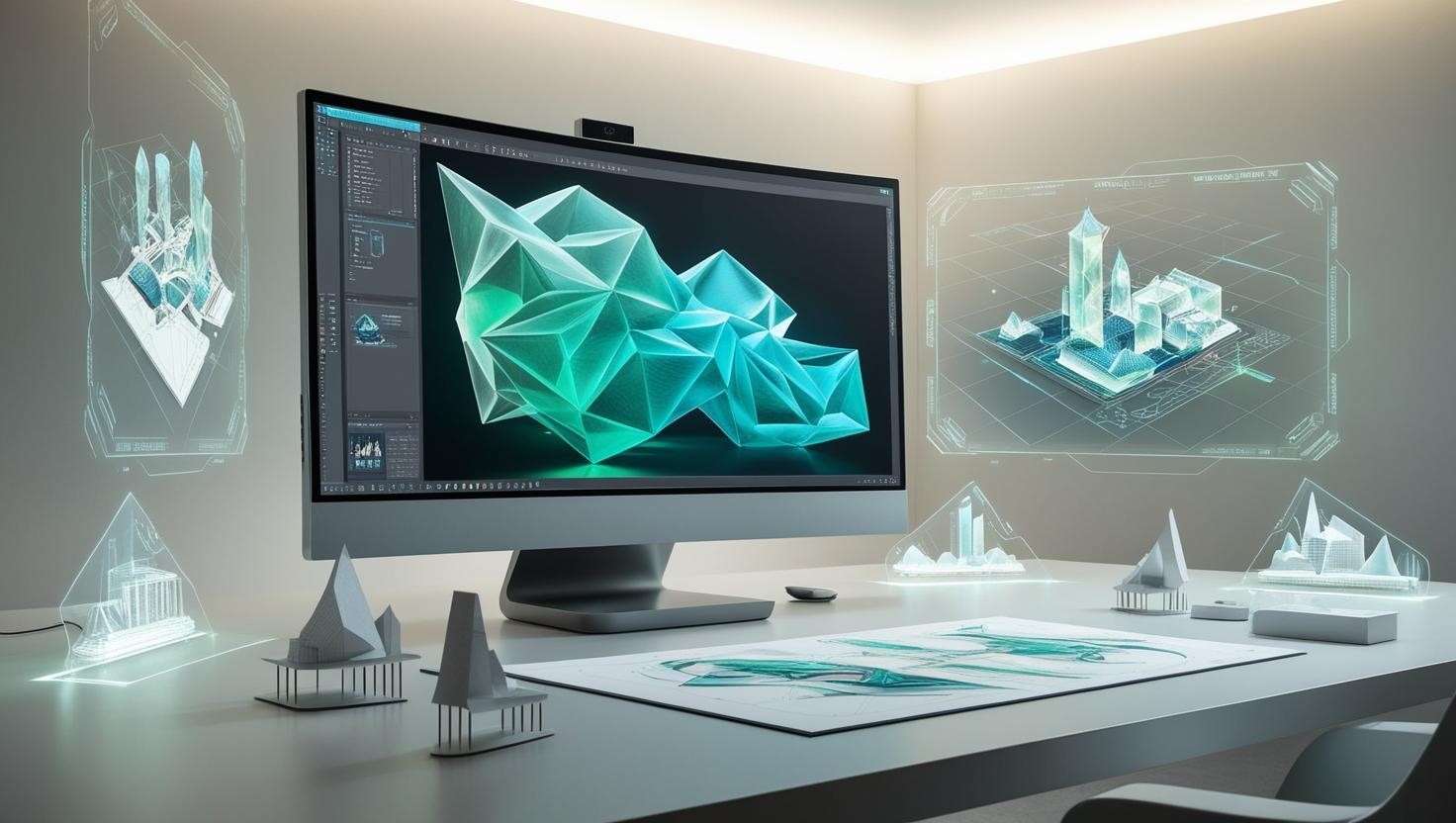
In the ever-evolving world of design, a quiet revolution is taking place—one driven not just by sketchbooks and CAD software, but by algorithms, data, and computational thinking. This is the era of Computational Design, where creativity meets code to unlock possibilities far beyond traditional methods.
What is Computational Design?
At its core, computational design is the use of computational processes to aid or automate design. It involves writing scripts or using visual programming to generate, analyse, and optimize design solutions. Unlike conventional design—which often involves manual iterations—computational design allows designers to set rules and parameters, letting the computer explore thousands of variations in seconds.
This approach is not limited to architecture. It’s reshaping industries like product design, urban planning, engineering, and even fashion.
Why Does It Matter?
.

Computational design doesn’t just make things faster—it makes things smarter. Here’s why it’s a game-changer:
- Parametric Flexibility: Designers can define relationships between elements. Change one variable, and the entire system adapts.
- Optimization: Algorithms can help find the most efficient, sustainable, or cost-effective solutions by analysing countless scenarios.
- Complex Geometry: Designs that were once impossible or too time-consuming to build—such as freeform facades or organic structures—can now be modelled and fabricated accurately.
- Data-Driven Design: Real-world data (like climate, traffic, or user behaviour) can directly influence design decisions.
Tools of the Trade
The computational design toolbox includes both visual and text-based platforms. Some of the most widely used tools are:
- Grasshopper 3D (for Rhino): A visual scripting tool that makes parametric design accessible without traditional coding.
- Dynamo (for Revit): Helps automate and customize building information modelling (BIM).
- Python & C#: For those delving deeper, these languages offer more flexibility and control in scripting.
- Processing and p5.js: Popular for interactive and generative art.
- Houdini: Known for visual effects, now increasingly used in architectural design and digital fabrication.
- Architecture: Zaha Hadid Architects and BIG use computational design to create iconic buildings with complex geometries.
- Urban Planning: Simulations help optimize walkability, sun exposure, and wind flow in new developments.
- Sustainability: Designers use algorithms to minimize material use or maximize solar gain.
- Furniture and Product Design: Parametric design enables mass customization—each product can be uniquely tailored to the user.
Challenges and the Future

While powerful, computational design is not without challenges:
- Learning Curve: There’s a gap between design intuition and programming logic.
- Tool Limitations: Designers often need to blend several platforms to get desired results.
- Collaboration: Integrating computational workflows into traditional teams can be difficult.
Yet, as AI and machine learning merge with computational design, we’re only beginning to scratch the surface. Imagine AI that co-designs with you or generative tools that understand context as deeply as a human would.

Conclusion
Computational design is not about replacing designers with machines—it’s about empowering designers with new tools for creativity, efficiency, and insight. As we embrace this digital craftsmanship, we reimagine not just how we design, but what’s possible to create.